01
Create concepts
- Create new concepts with simple, flexible metadata
- Add subjects, topics, and tags to keep your knowledge organized from the start
![[object Object]](/_next/image?url=%2Flanding-features%2Fconcept-modal.png&w=3840&q=75)
02
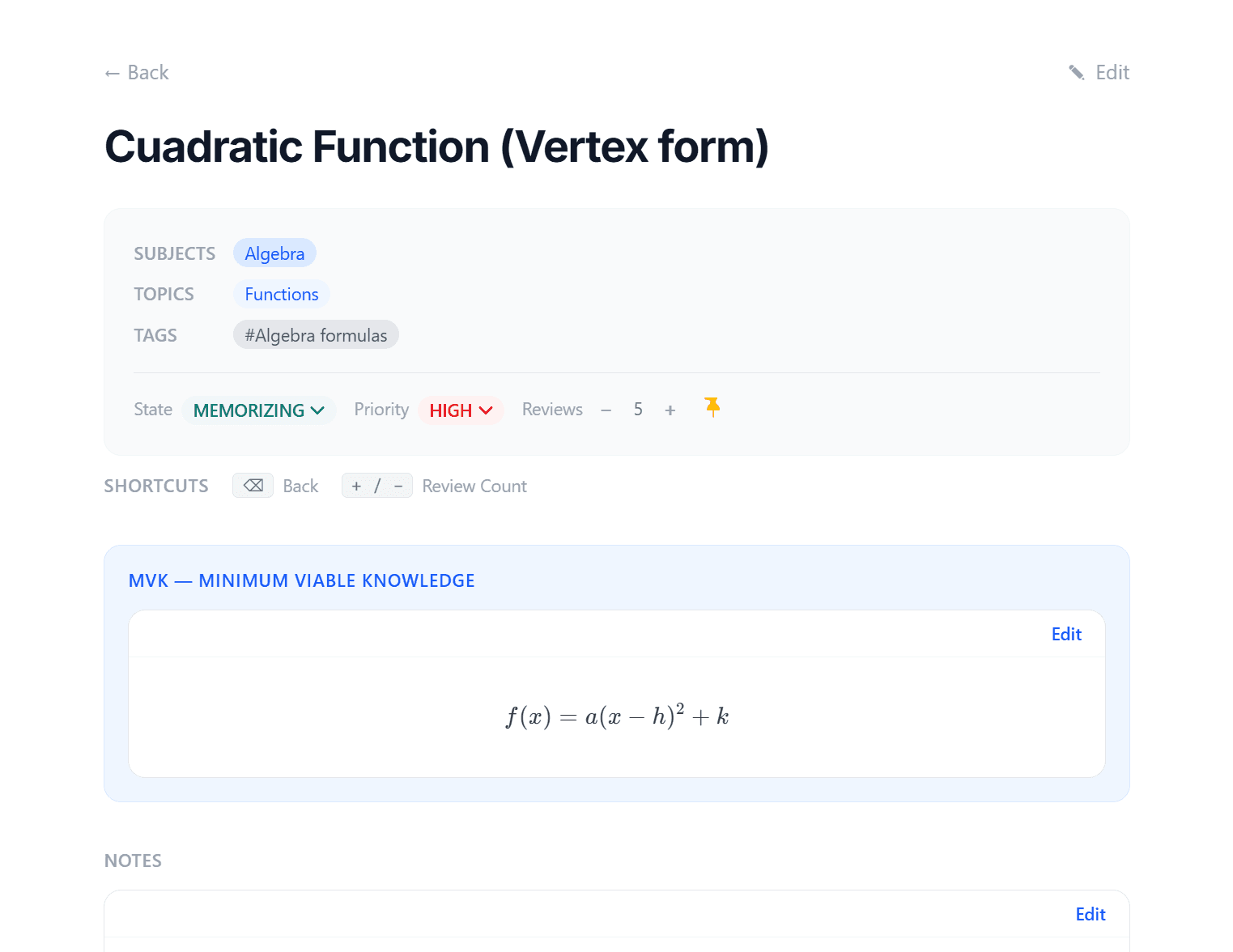
Build each concept
- Update concept status for targeted review and statistics
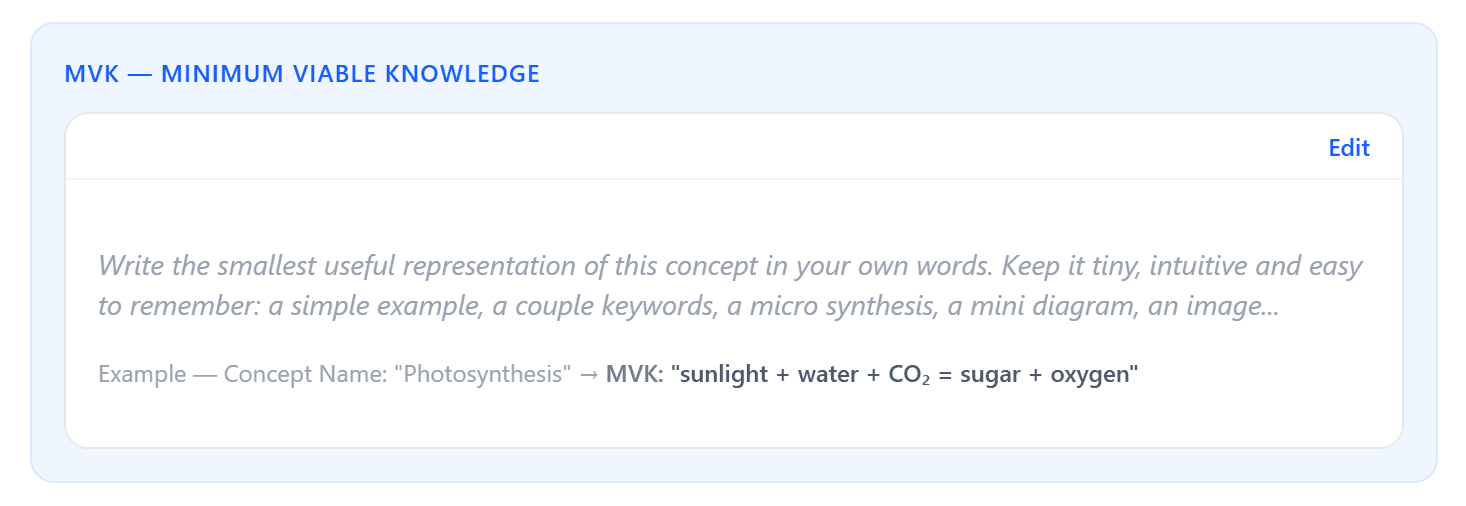
- Add a compact MVK for quick reviews and better retention
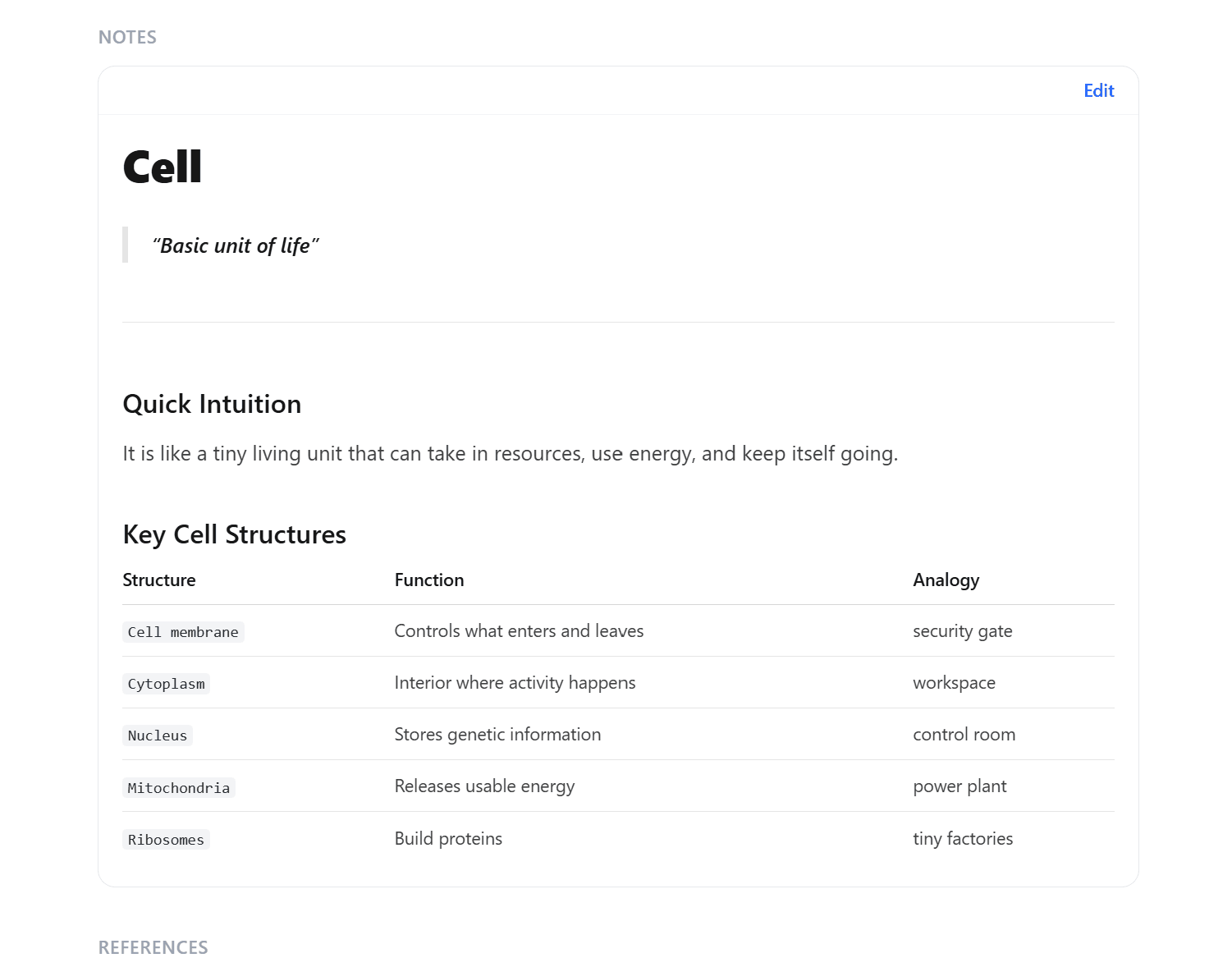
- Write structured notes with Markdown — a simple, portable, and AI-friendly format
03
Organize and review your library
- Organize your concepts with search, sorting, and filtering — keeping your library maintainable as it grows
- Review concepts directly from the Library while updating their status
![[object Object]](/_next/image?url=%2Flanding-features%2Flibrary-view.png&w=3840&q=75)
![[object Object]](/_next/image?url=%2Flanding-features%2Ffocus-view.png&w=3840&q=75)
04
Review one concept at a time
- Use Focus mode for more in-depth review
- Show or hide MVK, notes, and references as needed
05
Skim concepts at high speed
- Use Index mode for ultra-fast review across many concepts
- Move quickly through your knowledge with minimal friction
![[object Object]](/_next/image?url=%2Flanding-features%2Findex-view.png&w=3840&q=75)
![[object Object]](/_next/image?url=%2Flanding-features%2Fsubject-view.png&w=3840&q=75)
06
Review by subject
- Open a subject and review all related concepts in one place
- Create your own concept order so concepts build on each other more intuitively
07
Log study sessions
- Keep track of your study time and build consistency
- Log study sessions by subject and keep a history of your efforts
![[object Object]](/_next/image?url=%2Flanding-features%2Fsession-view.png&w=3840&q=75)
![[object Object]](/_next/image?url=%2Flanding-features%2Foverview-view.png&w=3840&q=75)
08
Track your progress
- View study activity, concept inventory, and metadata catalogue in one place
- Keep meaningful statistics that support long-term learning
The idea
A simple system for long-term learning
- —Learning systems work well at a small scale, but become unmaintainable as they grow over time.
- —As the system grows, it becomes more difficult to organize, review, and retain knowledge.
- —TortugaIQ is built around the concept as the basic unit of knowledge.
- —Each concept has a minimal representation, or “Minimum Viable Knowledge (MVK)”, which is the smallest amount of information worth remembering.
- A clearly defined concept name gives the mind a stable reference point
- A well-thought-out MVK reduces the idea to a highly compressed, usable, and memorable representation
- This makes the link between the concept and its representation much easier to form from the start
- That pairing alone can already create surprisingly strong initial memories
- The concept name can then act as a reliable trigger for recalling and reinforcing the MVK
- Later review strengthens the link, but the structure already works from the beginning
- This structure also supports easy, targeted review, regardless of the size of the knowledge base